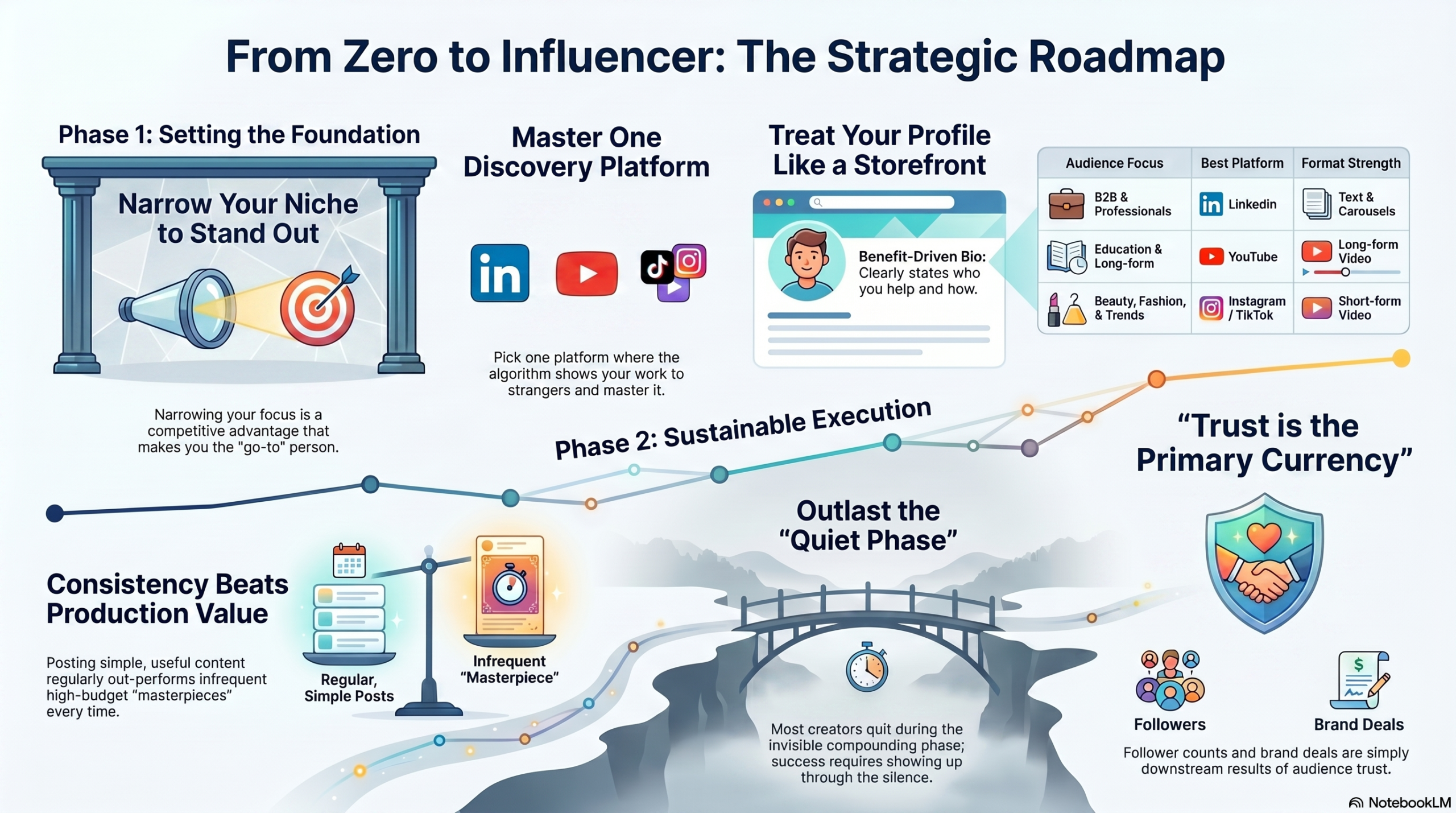
Becoming an influencer from absolute zero comes down to five things, in order: choose a specific niche, pick one platform to start, set up a profile that signals what you’re about, commit to a content format you can sustain, and show up consistently long enough for it to compound. You don’t need expensive gear, a big budget, or an existing following — you need a clear focus and the discipline to keep going before the results arrive. This guide walks through exactly how to begin.
What “influencer” actually means (and why it matters)
Forget the glamour for a second. An influencer is simply someone whose recommendations a specific group of people trust. That’s it. The follower count, the brand deals, the income — those are downstream of one thing: trust with a defined audience. Internalize that early, because it changes every decision you make. You’re not trying to be famous; you’re trying to become the person a particular group listens to. That reframe is what separates creators who build a business from creators who just chase attention.
Step 1 — Choose a specific niche
The single most important early decision. A niche is the intersection of what you can talk about consistently and what a specific group of people cares about. Going broad feels safer, but it’s the slow death — “lifestyle” content competes with everyone and resonates with no one. A specific niche (“budget travel for solo women,” “strength training for people over 40,” “Notion setups for students”) gives you a clear audience, obvious content ideas, and a reason for someone to follow you instead of the thousand generalists.
We cover this in depth in the niche guide, but the short version: pick something specific enough that you could be known as the person for it. Narrow isn’t a limitation — it’s the entire advantage. You can always expand once you own a niche; you can’t stand out by starting broad.
Step 2 — Pick one platform to start
New creators make the mistake of trying to be everywhere at once and end up doing everything badly. Pick one platform and learn it deeply first. Choose based on three things:
- Where your niche audience already hangs out. Beauty and fashion skew Instagram and TikTok; how-to and long-form education skew YouTube; B2B and professional content skew LinkedIn; fast trends and discovery skew TikTok.
- The content format you can actually sustain. Hate being on camera? Short-form video may not be your starting point. Love writing? A platform that rewards text or carousels fits better. Play to a format you’ll still be making in six months.
- Discovery potential. Some platforms surface new creators to non-followers aggressively (TikTok, YouTube, Reels), which is a gift when you have zero audience. Lean into platforms where the algorithm will show your work to strangers.
Start with one, get traction, then expand by repurposing your content to others. One platform done well beats five done poorly.
Step 3 — Set up a profile that signals what you’re about
When someone lands on your profile, they decide in about two seconds whether to follow. Make those seconds count:
- A clear, benefit-driven bio. Say who you help and how. “I help [audience] do [outcome].” Not “just a girl who loves coffee and chaos.” Vague bios convert no one.
- A recognizable handle and photo. Easy to remember, consistent across platforms, clearly you.
- One clear next step. Early on, that might be “follow for [topic].” Later it becomes a link to your offer or email list. Don’t bury the action.
- A pinned or featured piece that shows your best work and what to expect.
Your profile is a storefront, not a diary. Every element should answer the visitor’s only question: “what’s in this for me, and should I follow?”
Step 4 — Commit to a content format you can sustain
Consistency beats production value, especially early. Choose a primary format — short-form video, carousels, long-form video, written threads — that you can produce repeatedly without burning out. A creator who posts a simple, useful video three times a week will out-grow one who posts a cinematic masterpiece once a month, every time. The goal in your first months isn’t perfection; it’s reps. You’ll improve by doing, not by waiting until you’re “ready.”
Step 5 — Show up consistently (the part everyone quits on)
Here’s the uncomfortable truth: almost everything good in this game comes from showing up consistently over a long time, and none of it looks impressive day to day. Your first posts will get few views. That’s normal and it’s not a verdict — it’s the cost of entry. Compounding is invisible early, which is exactly why most people quit right before it starts working.
Pick a sustainable cadence you can hold for months, not a frantic sprint that burns you out in three weeks. The creators who “made it” almost always look like overnight successes and rarely are. Behind the moment it clicked are months of unremarkable, consistent posting. Decide now that you’ll outlast the quiet phase, because that decision is most of the battle.
Common beginner mistakes to avoid
- Going too broad. The number one killer. Niche down.
- Spreading across every platform at once. Master one first.
- Obsessing over follower count instead of building trust and engagement.
- Waiting until everything is perfect to start. Start now; improve in public.
- Quitting during the quiet phase. The early silence is normal — outlast it.
- Copying generalists instead of being specifically useful to a defined audience.
Key takeaways
- An influencer is someone a specific group trusts — build trust, not just reach.
- Choose a specific niche; narrow is the advantage.
- Start on one platform where your audience already is and the algorithm shows you to strangers.
- Set up a benefit-driven profile that signals who you help and how.
- Pick a sustainable format and show up consistently long enough to compound.
Frequently asked questions
How many followers do you need to be an influencer? Fewer than you’d think. Creators with a few thousand engaged, niche followers are considered influencers and can earn through their audience. Trust and engagement matter far more than raw follower count.
Can you become an influencer with no money? Yes. You can start with just a phone and a clear niche. The real investment early on is time and consistency, not equipment or ad spend.
Which platform is best to start on? The one where your target audience already spends time and where the algorithm surfaces new creators to non-followers (TikTok, YouTube, and Reels are strong for discovery). Pick one, master it, then expand.
How long does it take to become an influencer? Usually months before meaningful growth, because compounding is invisible early. Consistency over time is what pays off — most “overnight successes” spent a long time in the quiet phase first.
Do I need to show my face to be an influencer? No. Faceless and niche-expertise accounts grow successfully. Choose a format and style you can sustain — whether that’s on-camera, voiceover, or written content.